The Digital Curator: How AI Elevates “Wondrous Things” a Fine and Antique Dealer 2026
In 2026, the fine antique market is being reshaped by a shift toward authenticity and human craftsmanship, as a counter-movement to mass-produced AI content. For a high-end Florida dealer, AI acts as a “digital curator” that protects your time while elevating the prestige of your collection across your showroom, website, and eBay store.
1. High-Tech Authentication & Provenance
In an era of sophisticated replicas, AI provides an objective layer of trust for high-value collectors.
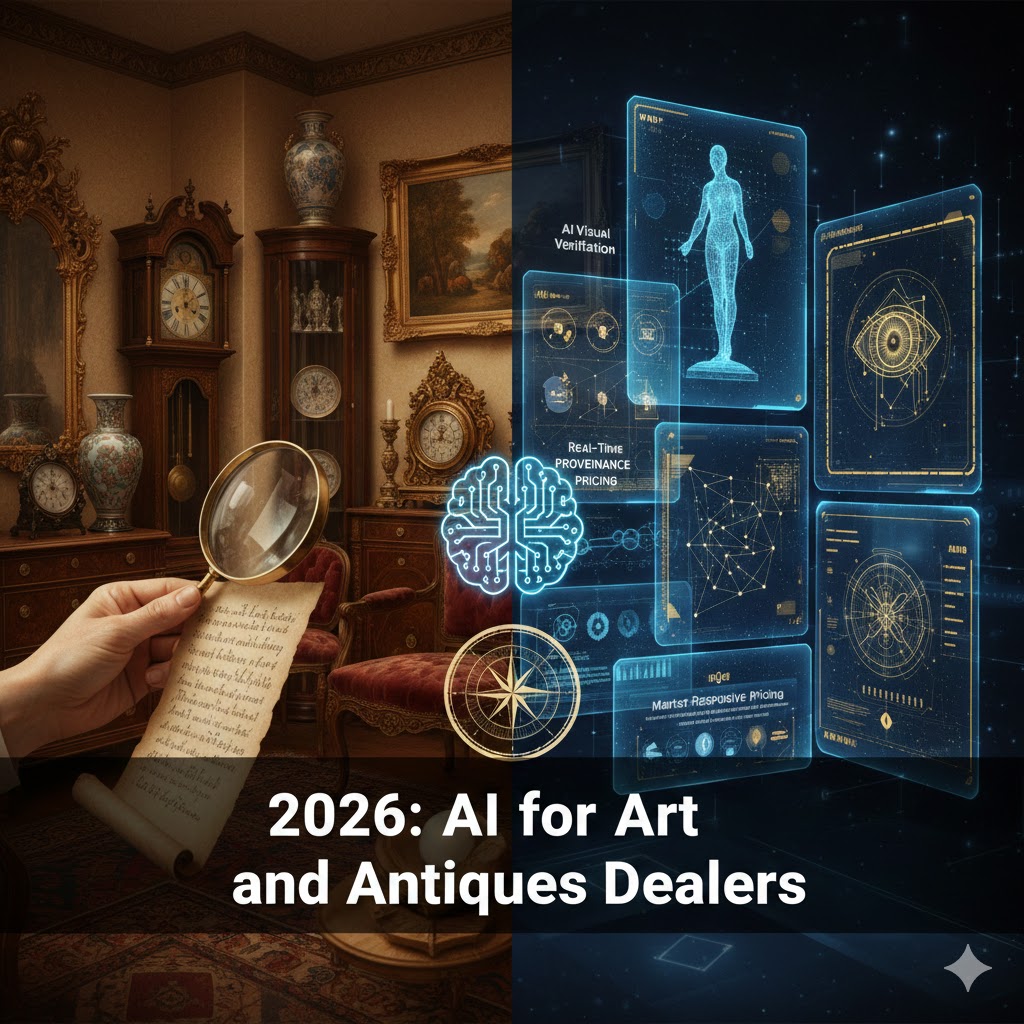
- Visual Verification: Advanced AI tools like Antique Identifier use image recognition to pinpoint an item’s era, material, and historical significance, often identifying markers invisible to the naked eye.
- Condition-Based Valuation: AI algorithms now analyze photos to detect minute wear, scratches, or restoration work, ensuring your eBay and website pricing accurately reflect the item’s physical state.
- Instant Expert Summaries: AI can scan vast databases of auction records and historical texts to provide a comprehensive “provenance report” in seconds, a process that once took hours of manual research.
2. Effortless Multi-Channel Sales
Managing a physical showroom alongside global digital platforms like eBay and a private website can be a logistical nightmare. AI streamlines this into a single workflow.
- Magical Listing Generation: Simply photographing a new arrival can trigger AI to draft SEO-friendly descriptions, categorize the item, and suggest tags tailored for different platforms.
- Real-Time Inventory Sync: Tools like Trunk or Sellbrite ensure that if a rare lamp sells in your Atlanta showroom, it is instantly delisted from eBay and your website, preventing the embarrassment of overselling.
- Market-Responsive Pricing: AI monitors global demand and competitor listings in real-time, suggesting price adjustments to ensure your rare finds remain both competitive and profitable.
3. Hyper-Personalized “Aspiration” Marketing
In 2026, luxury marketing is moving away from generic newsletters toward predictive outreach.
- Strategic Recommendations: Instead of showing clients more of what they already own, AI analyzes social signals and lifestyle changes to suggest “aspirational upgrades”—like a heritage timepiece that signals a client’s professional advancement.
- Immersive Storytelling: AI-powered virtual showrooms allow remote collectors to visualize how an antique might look in their own home using AR technology, merging digital precision with the tactile realism of a physical visit.
- 24/7 Digital Concierge: AI chatbots on Wondrous-things.com can handle complex inquiries about material care or shipping logistics at any hour, maintaining a high-touch service experience even when your showroom is closed.