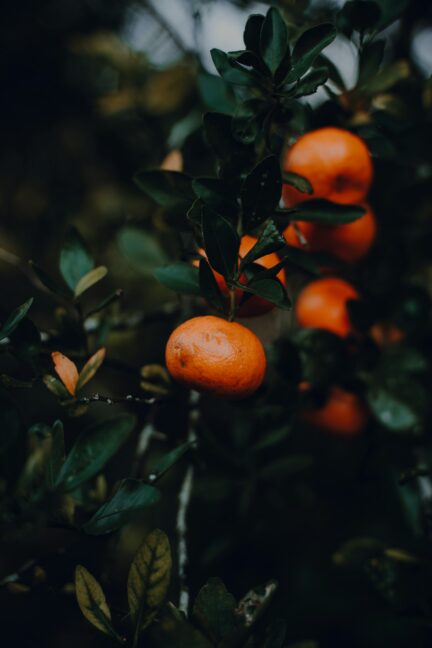
Photo by Elianna Gill on Unsplash. Used under the Unsplash License.
Quick Answer: USDA’s first forecast for Florida’s 2026-27 citrus season, released October 9, 2026, calls for 10.0 million boxes of oranges, down 23% from 12.95 million last season, after the winter freezes of December 2025 through February 2026. Total Florida citrus is projected to fall nearly 19%, even as the state commits $196 million to industry recovery.
Florida’s citrus industry entered the 2026-27 season facing its smallest projected orange crop in decades. The U.S. Department of Agriculture’s National Agricultural Statistics Service released its initial forecast from its Bartow field office on October 9, 2026, and the numbers reflect damage from two waves of freezing weather that hit the state between December 30, 2025, and February 4, 2026.
The forecast lands just weeks after USDA reported that Florida’s commercial citrus acreage fell 21% in a single year. Together, the two data releases describe an industry shrinking in footprint even as growers report healthier trees and better yields per acre on the groves that remain. This report pulls the verified numbers together and explains what they mean for one of Florida’s signature agricultural businesses.
What does USDA forecast for Florida citrus in 2026-27?
USDA’s October forecast puts Florida’s all-orange crop at 10.0 million 90-pound boxes. Non-Valencia oranges, which include early, mid-season and Navel varieties, are forecast at 3.0 million boxes, down 37%. Valencia oranges are forecast at 7.0 million boxes, down 14%.
| Crop (boxes) | 2026-27 forecast | 2025-26 final | Change |
|---|---|---|---|
| All oranges | 10.0M | 12.95M | -23% |
| Non-Valencia oranges | 3.0M | 4.77M | -37% |
| Valencia oranges | 7.0M | 8.18M | -14% |
| Grapefruit, all | 1.3M | 1.35M | -4% |
| Tangerines and tangelos | 450,000 | 460,000 | -2% |
| Lemons | 950,000 | 900,000 | +6% |
Sources: USDA NASS initial 2026-27 forecast as reported by the Florida Department of Citrus; 2025-26 figures from USDA NASS Citrus Summary, August 27, 2026.
Grapefruit is forecast at 1.3 million boxes, made up of 1.2 million boxes of red grapefruit and 100,000 boxes of white. Tangerines and tangelos are forecast at 450,000 boxes. Lemons are the lone bright spot at 950,000 boxes, up from 900,000 last season and 670,000 in 2024-25. Florida Trend, citing the News Service of Florida, reported that total Florida citrus production is projected to fall nearly 19%.
The forecast is built in part on tree counts. FreshPlaza reported the estimate uses about 4.7 million bearing non-Valencia trees and about 12.3 million bearing Valencia trees.
How does Florida compare with the rest of the country?
Spectrum News 13 reported that USDA projects total U.S. orange production down 3% to 61.7 million boxes, with Florida’s decline expected to outweigh gains in California and Texas. WGCU reported in July that California has overtaken Florida as the nation’s top orange-producing state.
Why is the 2026-27 orange crop so small?
The main cause is the winter freeze. Two winter storm systems brought freezing temperatures from December 30, 2025, to January 1, 2026, and again from January 26 to February 4, 2026. According to the Florida Phoenix, the Florida Department of Agriculture and Consumer Services preliminarily estimated total agricultural losses at $3.17 billion, with 66 of 67 counties recording multiple hours below freezing. Citrus losses alone were estimated at $674.6 million, including $327.3 million in tree damage and $220.5 million in future production.
Agriculture Commissioner Wilton Simpson called it “one of the most damaging freeze events for Florida agriculture in history,” the Phoenix reported. The Packer reported in November that about 15% of citrus trees were lost in affected areas, about 80% of the state’s citrus acres were significantly affected, and production losses ranged from 40% to 100% depending on the crop.
The freezes came on top of other stresses. WGCU reported that Florida endured its worst drought in more than two decades in 2026 and that an intensifying El Niño adds uncertainty for the new season. Citrus greening, also known as huanglongbing or HLB, was first confirmed in Florida in 2005 and, according to Florida Citrus as cited by The Packer, affects an estimated 80% of the state’s orange trees. There is no known cure.
What do industry leaders say?
Matt Joyner, chief executive of Florida Citrus Mutual, told Fresh Fruit Portal that “the devastating freezes last winter were a speed bump on our road to recovery,” and said growers are reporting healthier trees, improved fruit quality and higher production per acre. Shannon Shepp, executive director of the Florida Department of Citrus, told The Packer she expects the crop to beat USDA’s forecast, noting that last season Florida “ended up producing more citrus, oranges and grapefruit than the USDA crop forecast had predicted.” UF/IFAS Extension agent Matt Smith told Spectrum News 13 the drop was expected but “pretty troubling.”
How far has Florida citrus fallen from its peak?
The long-term trend is stark. In the 2003-04 season, USDA’s final forecast put Florida’s orange crop at 242.0 million boxes and grapefruit at 40.8 million. Two seasons later, in 2005-06, oranges had fallen to 147.9 million boxes. After Hurricane Ian in 2022, the 2022-23 orange crop fell to 15.9 million boxes, a level Growing Produce described as unseen since before World War II. The 2024-25 crop of 12.28 million boxes was lower still.
| Season | Florida oranges (million boxes) | Grapefruit (million boxes) |
|---|---|---|
| 2003-04 (peak) | 242.0 | 40.8 |
| 2005-06 | 147.9 | 19.3 |
| 2022-23 | 15.9 | 1.81 |
| 2024-25 | 12.28 | 1.30 |
| 2025-26 | 12.95 | 1.35 |
| 2026-27 (initial forecast) | 10.0 | 1.3 |
Sources: USDA NASS forecasts and summaries; Growing Produce; Florida Trend.
USDA’s Economic Research Service estimated that Florida orange production fell 92% from 2003-04 to the 2023-24 forecast, an average decline of about 6% a year, while bearing acreage fell about 3% a year. The agency pointed to four hurricanes in 2004 and 2005 and further hurricane damage in 2017 and 2022, alongside the spread of citrus greening.
How many acres of citrus are left in Florida?
USDA’s preliminary Commercial Citrus Inventory, released August 27, 2026, counted 165,359 acres of commercial citrus in 23 counties, down 21% from 208,186 acres a year earlier. The groves hold about 26.7 million trees.
| Category | Acres (2026) | Trees | Acreage change |
|---|---|---|---|
| Total citrus | 165,359 | ~26.7M | -21% |
| Oranges | 143,650 | ~23.1M | -22% |
| Valencia | 96,616 | ~16.0M | |
| Non-Valencia | 44,344 | ~6.6M | |
| Grapefruit | 11,456 | ~1.8M | -10% |
| Specialty fruit | 10,253 | ~1.8M | -11% |
Source: USDA NASS Commercial Citrus Inventory, preliminary, August 27, 2026.
Growers planted 5,200 new acres, but gross losses of 48,027 acres left a net decline of 42,827 acres, and all 23 published counties declined. Polk County remains the largest citrus county at 37,529 acres, down 10,944, followed by Highlands at 34,671. Florida Trend reported that today’s acreage is down 65% from 480,121 acres in 2016 and 73% from 621,373 in 2006.
One notable exit: Florida Trend reported that Alico, one of the state’s largest growers, decided to wind down its citrus operations and focus on land sales. Chief Executive John Kiernan said in the company’s August 10 quarterly report that “the Company has made the decision to wind down its citrus operations and focus on land sales.”
Which counties grow the most citrus?
Citrus Industry magazine reported that in 2025-26, Polk County produced 3.27 million boxes, Highlands 3.07 million, DeSoto 1.66 million, St. Lucie 1.40 million and Hardee 1.31 million. Together those five counties accounted for 73% of state production.
What are growers being paid?
USDA’s August Citrus Summary lists preliminary on-tree prices for 2025-26. All oranges averaged $12.14 per box, down from $13.21 the prior season. Valencia oranges averaged $12.75, down from $14.01, and non-Valencia oranges $11.09, down from $11.88. Grapefruit averaged $20.51, down from $21.91. Tangerines and tangelos rose sharply to $32.91 from $20.45, and lemons rose to $11.85 from $11.40.
Global juice prices have also retreated from records. Fresh Fruit Portal reported that frozen concentrated orange juice fell from about $7,000 per tonne at its late-2024 peak to about $2,850 per tonne by May 2026. Fundecitrus, Brazil’s citrus research group, forecasts Brazil’s 2026-27 crop at 263.2 million boxes, about 10% below 2025-26. The Florida Department of Citrus reported that in 2024-25 Brazil supplied 174.2 million of the 272.3 million gallons of frozen concentrated orange juice imported by the United States.
How much is Florida citrus worth to the economy?
The farm-gate value of the crop is now modest. The Florida Department of Citrus’s January 2026 outlook put on-tree revenue for the 2024-25 season at $212.9 million, down 15.6% from $252.4 million the season before, with oranges at $158.9 million, grapefruit at $38.6 million and specialty fruit at $15.4 million.
The broader industry is far larger because of juice processing, packing and distribution. The most recent University of Florida Institute of Food and Agricultural Sciences economic impact study, covering the 2020-21 season, estimated a total impact of $6.935 billion, supporting 32,542 full- and part-time jobs, $1.606 billion in labor income, $2.841 billion in value added to state economic output and $151 million in state and local taxes. Juice manufacturing accounted for $5.334 billion of the total, fruit production $1.425 billion and fresh fruit marketing $177 million. The Department of Citrus uses a rounded figure of $6 billion in its 2026 releases.
What is Florida doing to save its citrus industry?
The state is spending more. Florida Trend and Fresh Fruit Portal reported that the budget year that began July 1, 2026 includes $196 million for the citrus industry, including $160 million for the CRAFT program supporting new plantings and greening field trials, $20 million for nursery and packinghouse equipment and $15 million for marketing. The prior year’s total was $124.5 million. Senate President Ben Albritton said, “Florida citrus is not going down on my watch,” according to Florida Trend.
In Washington, H.R. 9094, the Florida Freeze Disaster Assistance Act, would provide $3.5 billion in USDA block grants. As of October 12 it had not cleared committee.
Is there a treatment for citrus greening?
Trunk injection of the antibiotic oxytetracycline is one tool growers are using. Citrus Industry reported that ReMedium TI received full EPA Section 3 registration and state approval on June 11, 2026, with a label allowing two consecutive treatment years starting in 2026-27 followed by a one-year break. UF/IFAS trials led by Ute Albrecht found injected trees produced 462 boxes per acre in year three versus 219 for untreated trees. Valencia yields rose 61% to 92% depending on the month of injection, and the highest dose produced about 6 pounds of juice solids per box compared with 4.5 pounds for untreated trees. The same report said 64% of growers have injected trees for three straight years.
Breeding is the longer-term answer. Citrus Industry reported that the University of Florida released two groups of greening-tolerant scions and rootstocks in February and December 2025, including an improved Hamlin selection, a more tolerant Valencia and a seedless, easy-peel tangelo. The varieties are licensed through the Department of Citrus’s designee with an eight-year period of exclusive access for Florida growers.
What comes next for the 2026-27 season?
USDA will release three more forecasts this season, in mid-January, April and July 2027, according to Spectrum News 13. Florida Trend reported the season will have four forecasts instead of the usual nine. The January update will be the first test of whether healthier surviving trees and trunk-injection programs can push production above the initial 10.0 million-box estimate, as industry leaders expect.
Frequently Asked Questions
How many oranges will Florida produce in 2026-27?
USDA’s initial forecast, released October 9, 2026, calls for 10.0 million boxes of oranges, down 23% from 12.95 million boxes in 2025-26.
Why is Florida’s orange crop down?
Freezes between December 30, 2025, and February 4, 2026, damaged trees and fruit, on top of long-term losses from citrus greening, hurricanes and drought.
How many acres of citrus does Florida have?
USDA counted 165,359 commercial citrus acres in 2026, down 21% in one year and down 73% from 2006.
How much is Florida spending on citrus?
The state budget for the year that began July 1, 2026 includes $196 million for the citrus industry, up from $124.5 million the year before.
When is the next Florida citrus forecast?
USDA’s next forecast is scheduled for mid-January 2027, followed by April and July updates.
Sources and Further Reading
- Citrus Summary, August 2026 (USDA National Agricultural Statistics Service, Florida Field Office)
- Commercial Citrus Inventory, Preliminary Report 2026 (USDA National Agricultural Statistics Service)
- Citrus Forecast, July 2004 (USDA National Agricultural Statistics Service)
- Chart of Note: Florida Orange Production (USDA Economic Research Service)
- USDA Releases First Citrus Crop Forecast for 2026-27 Season (Florida Department of Citrus, via Blue Book Services)
- Florida Citrus Outlook 2025-26 (Florida Department of Citrus)
- Citrus Industry Points to Winter Freezes for Forecast Drop (Florida Trend / News Service of Florida)
- Squeeze Continues on Florida Citrus Land (Florida Trend / News Service of Florida)
- USDA Forecast Shows Lower Citrus Production in Florida (Spectrum News 13)
- Freeze Dropped Agricultural Production by $3 Billion (Florida Phoenix)
- Resilient Florida Growers Pivot to Fresh Market Demand (The Packer)
- Florida Orange Forecast Down (Fresh Fruit Portal)
- ReMedium TI Receives Full Section 3 Label; Three Years of OTC Trunk Injection Provide Cumulative Benefits (Citrus Industry)
- Brazilian Orange Crop Forecast at 263.2 Million Boxes (FreshPlaza)
About Brian French
Led by a commitment to tech-intelligent curation, Brian French tracks and analyzes breaking Florida Business Headlines and breaking corporate developments defining Florida's economy. Brian brings an extensive financial background to his analysis, having graduated from the University of South Florida in Finance and serving as a Vice President and Portfolio Manager for Merrill Lynch Private Investors and the Trust Department in St. Petersburg, FL, as well as a Vice President and Trust Investment Officer for SunTrust Bank in Sarasota, FL. His writing blends macroeconomic trends, fiduciary capital markets, corporate strategy, and modern digital insights for a sophisticated look at Florida's business market.